Shri Ram Janmabhoomi Mandir

The Spiritual Heart of Ayodhya

    Name
    Phone
    Enter otp
    Check In Date
    Commencing Full Operations from 10th June 2026   |   Commencing Full Operations from 10th June 2026    |    Commencing Full Operations from 10th June 2026    |    Commencing Full Operations from 10th June 2026   |    Commencing Full Operations from 10th June 2026    |    Commencing Full Operations from 10th June 2026   |    Commencing Full Operations from 10th June 2026   |    Commencing Full Operations from 10th June 2026    |    Commencing Full Operations from 10th June 2026

    At the sacred centre of Ayodhya stands the Shri Ram Janmabhoomi Mandir, revered as the birthplace of Shri Ram, the seventh incarnation of Lord Vishnu. More than a place of worship, the temple represents centuries of faith, resilience, and collective devotion that have shaped India’s spiritual consciousness.

    Inaugurated on 22 January 2024, the Mandir marks a defining moment in the nation’s cultural and spiritual journey. It gives physical form to a belief long carried in memory and prayer, now realised in stone with dignity and grace.

    Located in the heart of Ayodhya, the temple draws pilgrims, seekers, scholars, architects, and travellers from across the world, each arriving not merely to witness a structure, but to experience the spiritual presence that anchors this sacred land.

    Janmabhoomi of Shri Ram

    The Sacred Site

    The Shri Ram Janmabhoomi is revered not only as a temple site, but as the Janmasthan, the birthplace of Bhagwan Ram, as described in ancient scriptures and Puranas. According to the Ramayana, this land once formed part of King Dashrath’s palace, where Shri Ram’s life journey began, from divine childhood to exile, return, and the embodiment of dharma.

    For thousands of years, this site has remained a focal point of devotion, referenced in sacred texts such as Valmiki’s Ramayana, Skanda Purana, Padma Purana, and Adhyatma Ramayana. Across generations, the land itself has been honoured as sacred, carrying spiritual continuity far beyond structure or era, and standing as a timeless symbol of faith rooted in righteousness.

    Architectural Grandeur

    Inspired by Shilpa Shastra

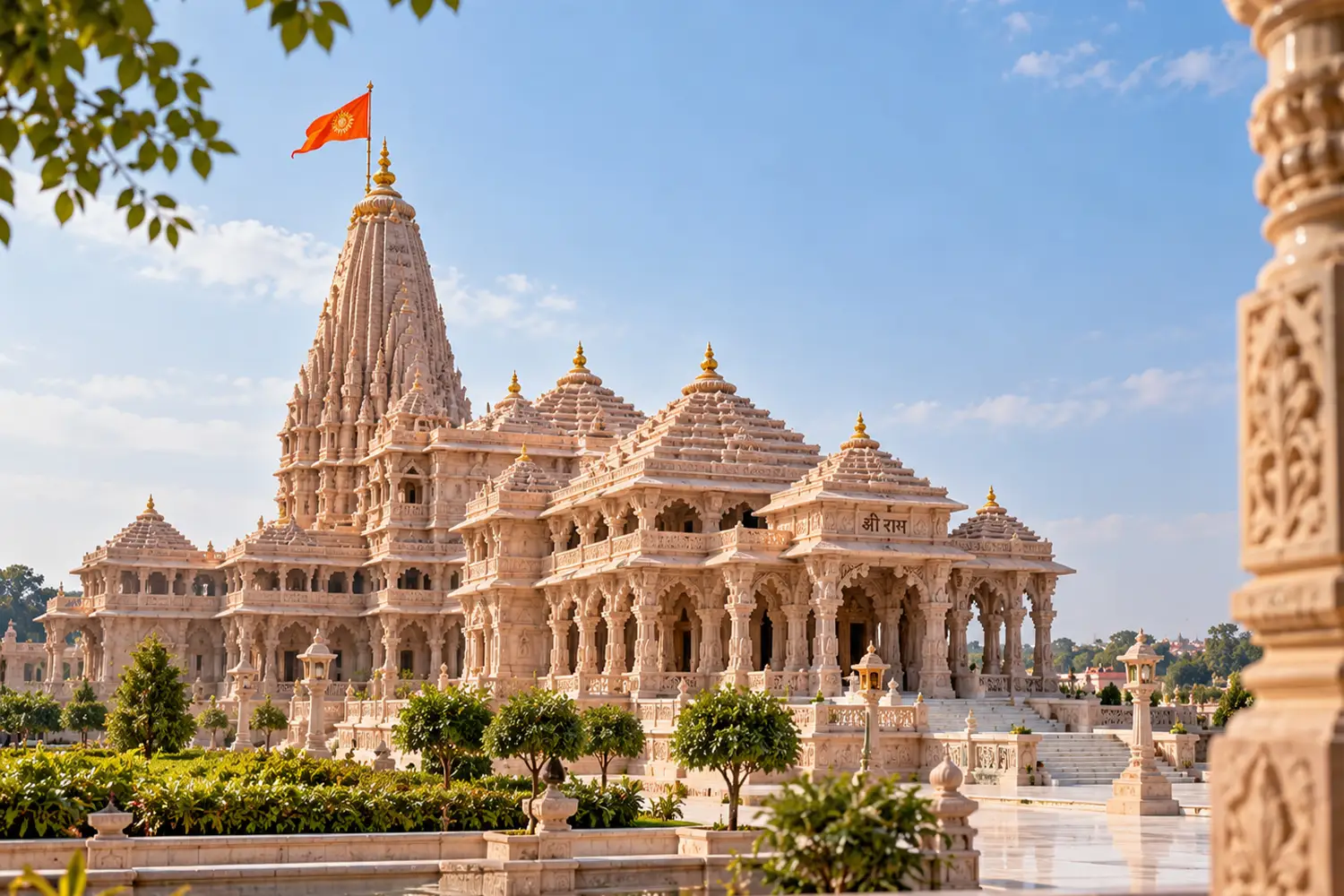
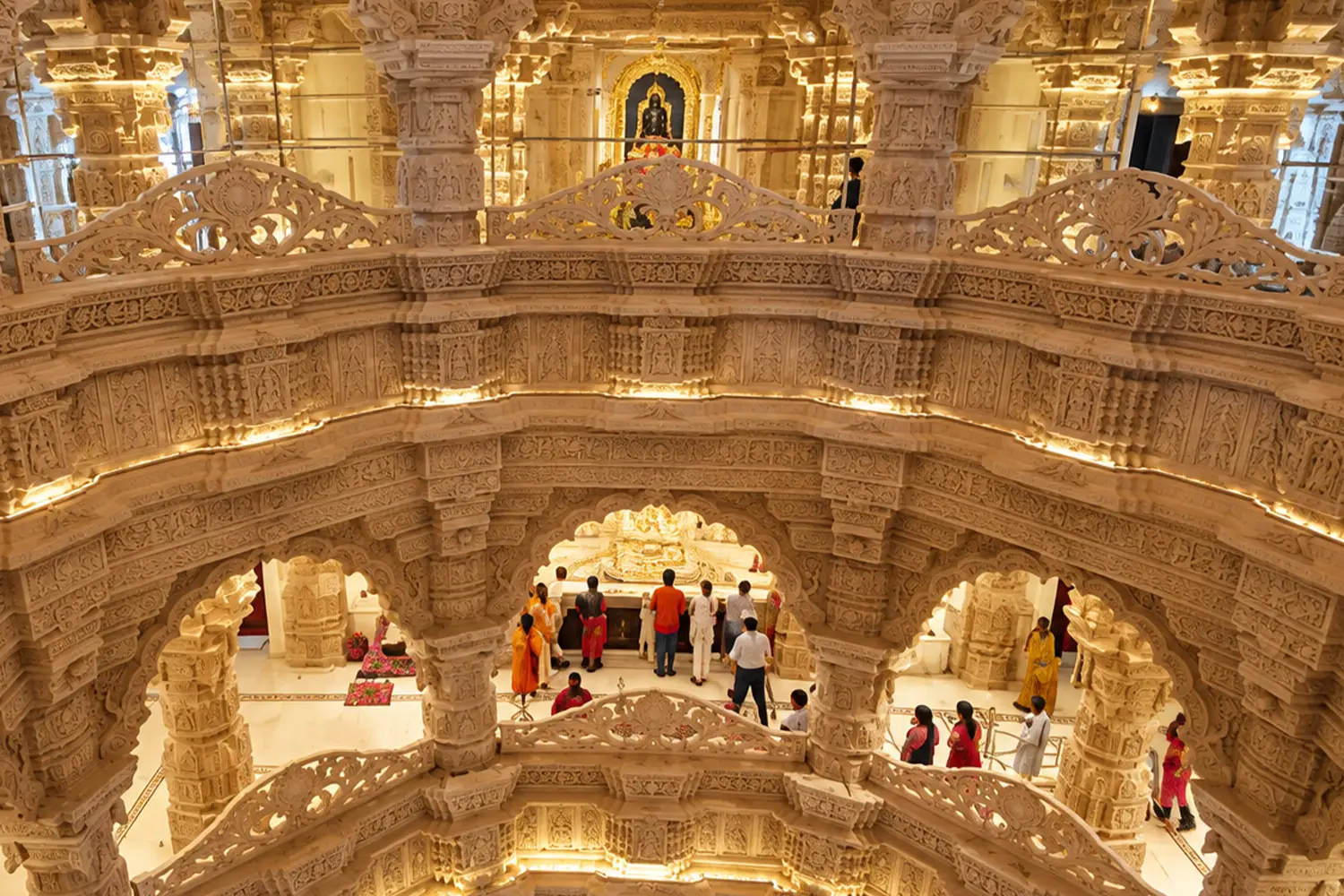
    Built in the traditional Nagara style, the Shri Ram Janmabhoomi Mandir reflects the principles of Shilpa Shastra and Vastu Shastra through its pink sandstone structure, crafted without the use of iron or steel. Rising 161 feet, the three-storeyed temple is supported by 392 intricately carved pillars and 44 ornate doorways.

    Intricate carvings of gods, sages, and sacred narratives transform the temple into a living expression of the Ramayana. The Ramayana Path and a digitally enabled gallery further guide visitors through the epic’s milestones, connecting ancient storytelling with contemporary experience.

    Ram Lalla, the Divine Child

    The Sanctum

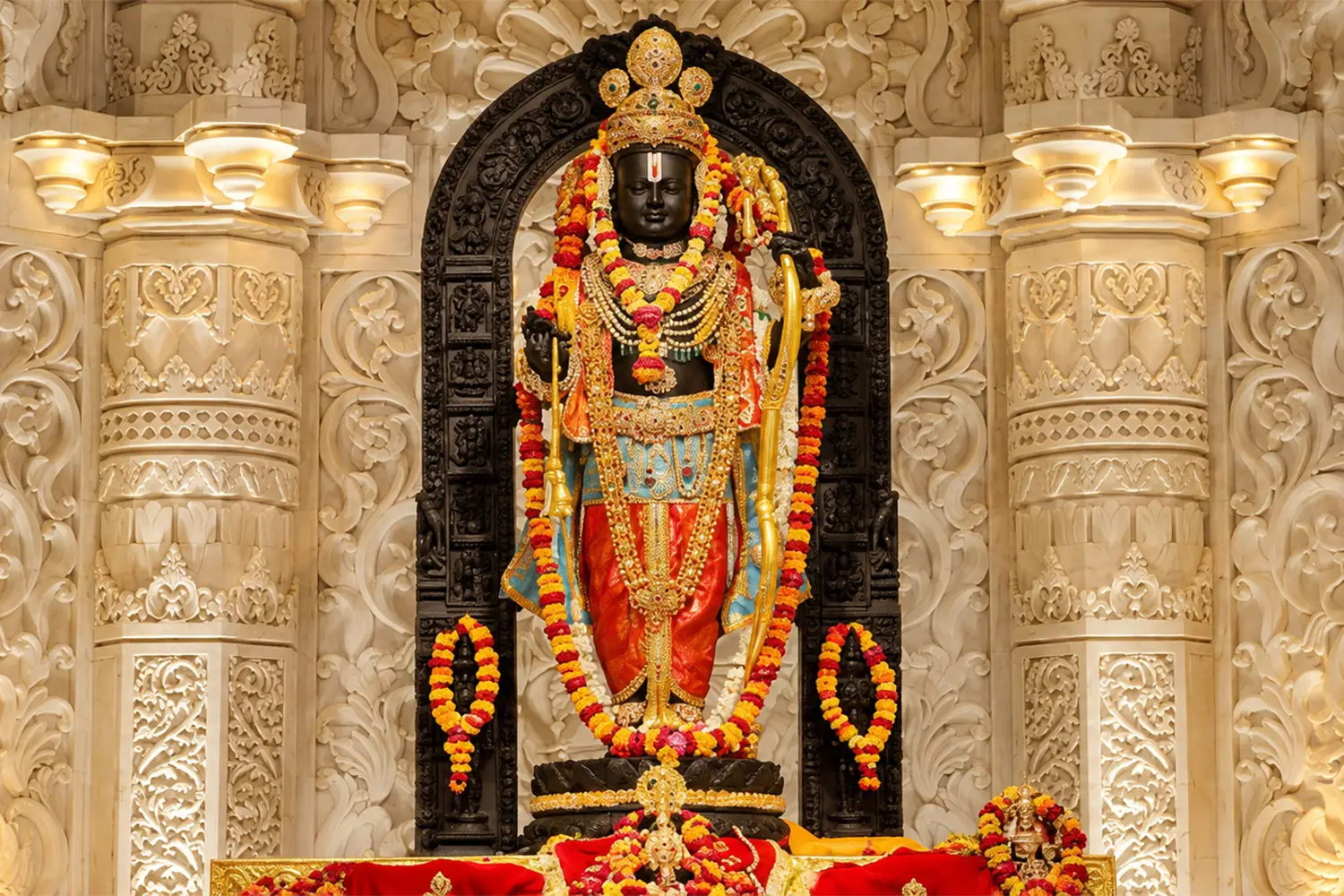
    At the heart of the temple lies the garbhagriha, housing the idol of Ram Lalla, the infant form of Shri Ram. Carved from Krishna Shila, a revered black schist stone, the idol embodies purity, innocence, and profound spiritual calm.

    Crafted by renowned sculptor Arun Yogiraj of Karnataka, the idol stands 51 inches tall and weighs approximately 1.5 tons. It is adorned with gold and precious stones, including diamonds, rubies, and emeralds, reflecting the devotion and reverence offered by millions of devotees.

    Darshan Timings and Rituals

    The temple follows a structured daily schedule to facilitate worship and maintain sanctity:

    • Mangala Aarti: 4:00 AM
    • Shringar Aarti: 6:15 AM
    • Shayan Aarti: 10:00 PM

    Please note: Entry for specific aartis may require prior registration or special passes

    A Timeless Centre of Faith

    The Shri Ram Janmabhoomi Mandir stands not only as a monument of devotion but as a reminder of enduring values, righteousness, humility, and faith. Rooted in ancient belief yet realised in the present, it continues to guide generations toward reflection, reverence, and spiritual clarity.