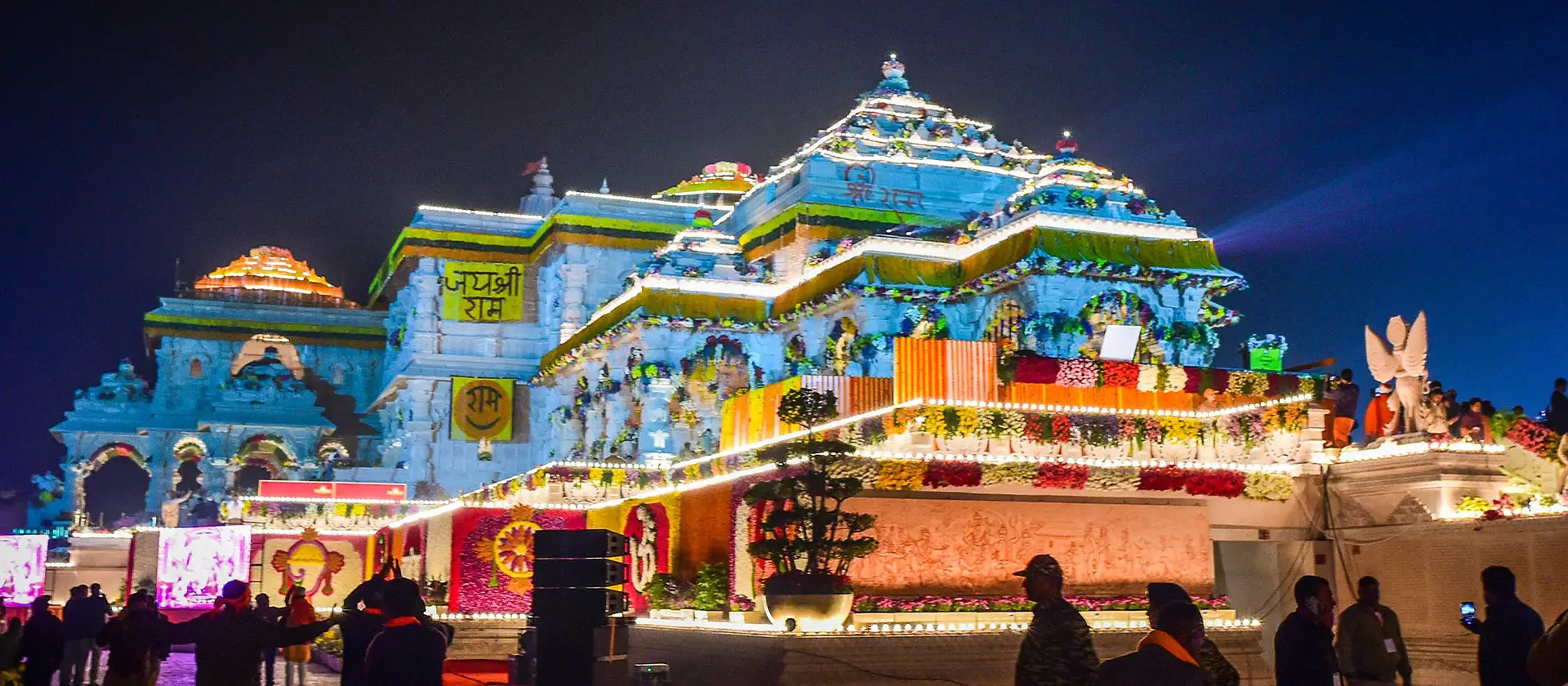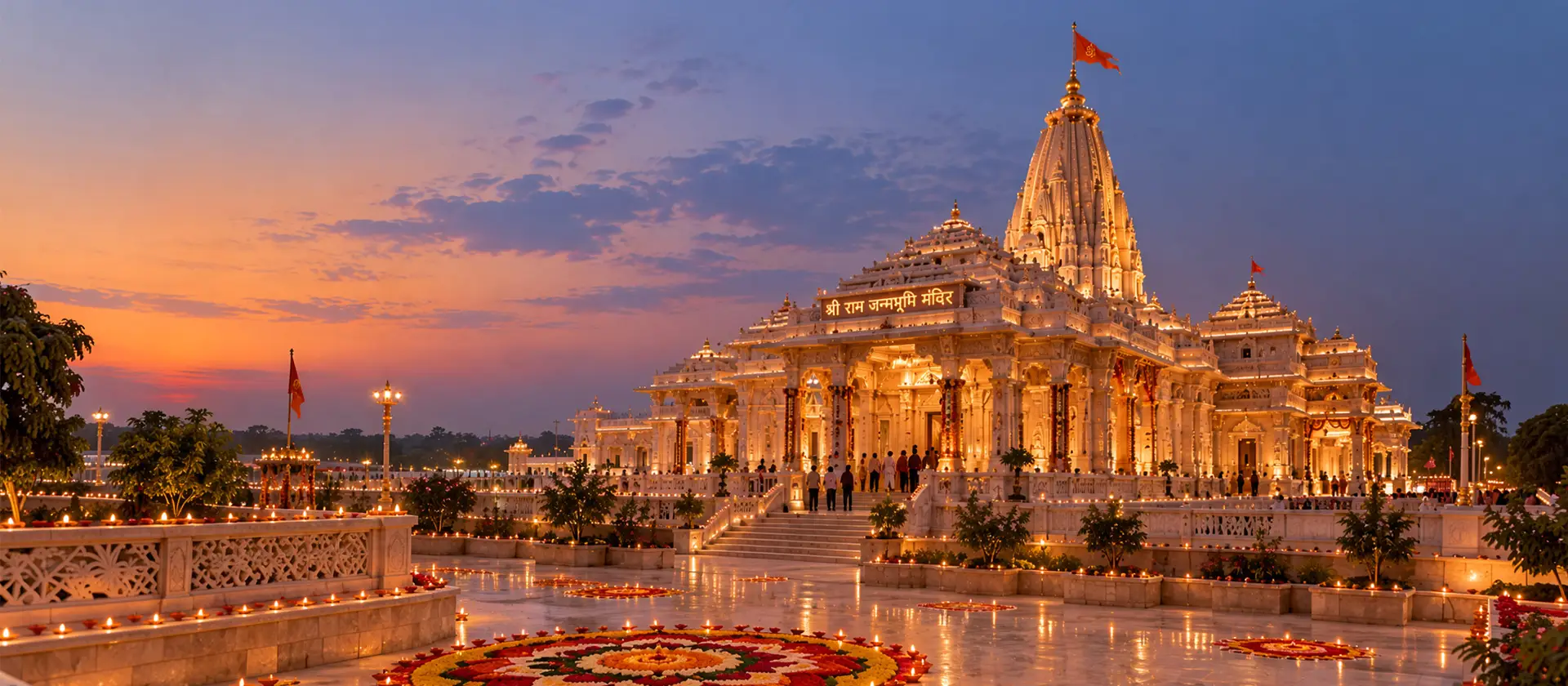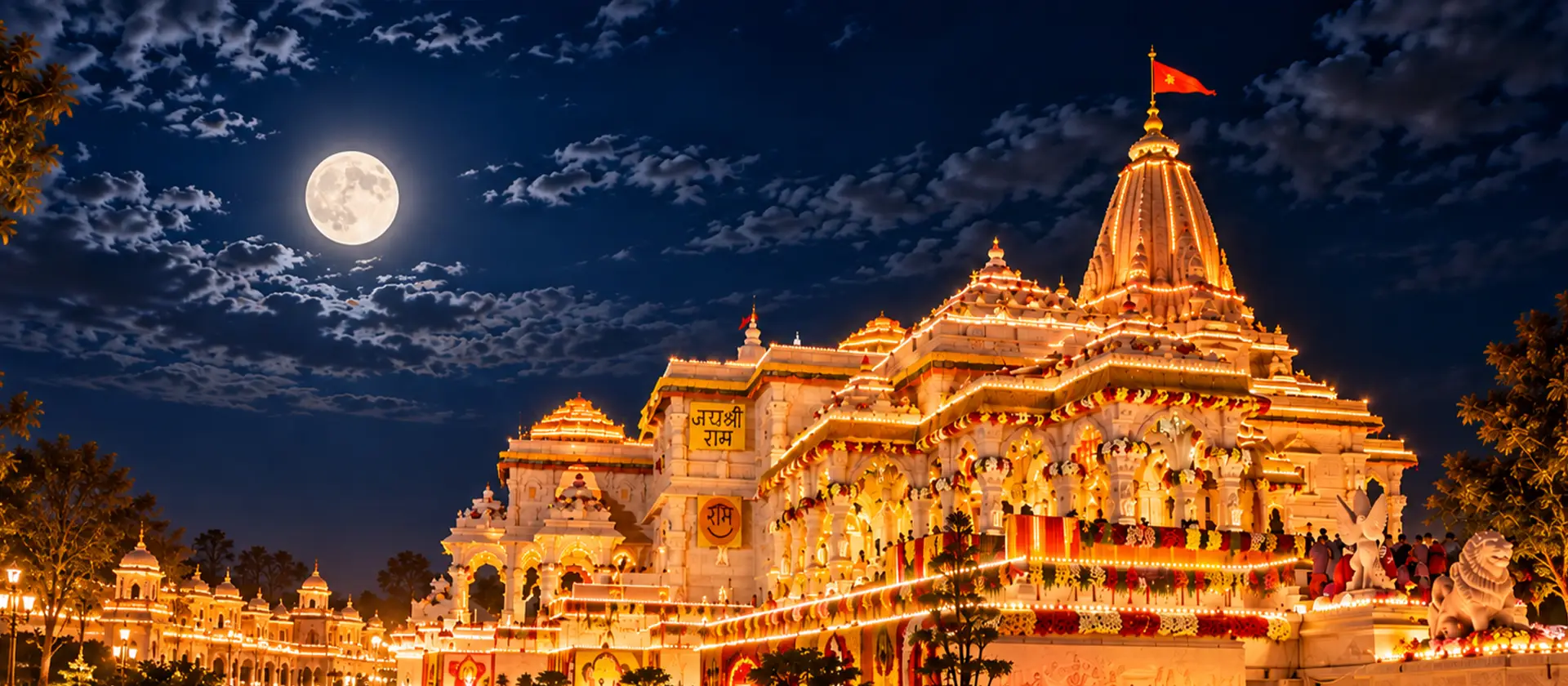
Kartik Purnima in Ayodhya will be observed on Tuesday, 24 November 2026, marking the full moon of the Hindu month of Kartik. The celebrations centre around the holy Saryu Snan, Deep Daan, temple prayers and religious gatherings. Visitors can also explore the famous Kartik Mela, sacred parikrama traditions and important temples, including Shri Ram Janmabhoomi Mandir. This guide covers the festival's significance, key rituals, places to visit and practical information for planning your Ayodhya trip.
Where to stay: Plan your Kartik Purnima visit around a comfortable base at Evoke Rambagh, a 25-acre luxury resort just 3 km from Shri Ram Janmabhoomi Mandir.
Understanding Kartik Purnima and Its Significance in Ayodhya
A full moon, a sacred river and centuries of devotion. Kartik Purnima brings these elements together in one of Hinduism’s most revered observances.
What Makes Kartik Purnima Spiritually Important?
Kartik Purnima falls on the full moon day of Kartik, a month considered especially auspicious for prayer, charity and spiritual practices.
The festival is associated with Lord Vishnu and Lord Shiva and is also known as Tripuri Purnima. Devotees believe that performing sacred rituals on this day brings spiritual merit and blessings.
Kartik Purnima Traditions in Ayodhya
In Ayodhya, the festival is closely associated with the River Saryu.
Devotees begin their day with a holy dip, followed by temple visits, prayers, offerings and charitable acts. Many also light earthen lamps as an expression of faith and gratitude.
Why Devotees Visit Ayodhya During Kartik Purnima
As the birthplace of Lord Ram, Ayodhya holds immense religious significance.
During Ayodhya Kartik Purnima, pilgrims visit the city’s sacred ghats and temples to participate in traditional ceremonies and seek blessings, making it an important occasion in Ayodhya’s religious calendar.
Kartik Purnima Rituals in Ayodhya
The beauty of Kartik Purnima lies in its rituals, each carrying a meaning that extends beyond the ceremony itself.
Saryu Snan Ayodhya
The sacred bath, or Saryu Snan Ayodhya, is among the festival’s most important observances.
Devotees gather at the river ghats, often before sunrise, to take a holy dip believed to purify the mind and soul.
The experience is accompanied by prayers, chants and offerings, reflecting the river’s importance in Ayodhya’s spiritual traditions.
Deep Daan and Offering Diyas
Deep Daan involves offering illuminated earthen lamps as a symbol of devotion and the victory of light over darkness.
During Kartik Purnima, devotees light diyas at temples and designated areas near the river, creating a beautiful atmosphere of prayer and reflection.
Temple Visits and Evening Prayers
Visiting temples is another important part of Kartik Purnima rituals.
Devotees offer flowers, prayers and other traditional offerings at temples dedicated to Lord Ram, Lord Hanuman and other deities. Evening aarti provides a meaningful conclusion to the day’s observances.
The Parikramas of Ayodhya During Kartik
For many devotees, faith is expressed not only through prayer but also through the journey itself.
Ayodhya’s sacred parikramas involve walking around designated pilgrimage circuits as an act of devotion.
What Is the 14 Kosi Parikrama?
The 14 Kosi Parikrama is an approximately 42-kilometre pilgrimage circuit around the wider sacred boundaries of Ayodhya.
Traditionally observed during Kartik Shukla Navami, it attracts devotees who undertake the journey while chanting prayers and devotional hymns.
The Panchkosi Parikrama Route
The Panchkosi Parikrama covers approximately 15 kilometres around Ayodhya’s inner sacred circuit.
Associated with Devuthani Ekadashi during Kartik, it allows devotees to undertake a shorter pilgrimage while passing through important religious areas.
The 84 Kos Parikrama Explained
The 84 Kos Parikrama covers a much larger sacred region associated with the historical kingdom of Kosala.
Unlike the shorter Kartik parikramas, this extended pilgrimage takes place over several days and follows a separate traditional schedule.
Visitors should confirm official routes, dates and arrangements before participating.
Experience Kartik Mela Ayodhya
The festival is not limited to temple rituals. It also brings communities together through religious gatherings and local traditions.
Festive Activities and Religious Gatherings
Kartik Mela Ayodhya attracts pilgrims who participate in Saryu Snan, devotional singing, temple visits and religious ceremonies.
The ghats and surrounding areas become important gathering points, offering visitors an opportunity to experience the city’s living traditions.
Markets, Food and Local Experiences
Ayodhya’s markets add another dimension to the festivities.
Visitors can explore shops offering religious souvenirs, flowers, prayer accessories, traditional sweets and local snacks.
A leisurely walk through these markets offers a glimpse into everyday life during the festival.
Places to See in Ayodhya During Kartik Purnima
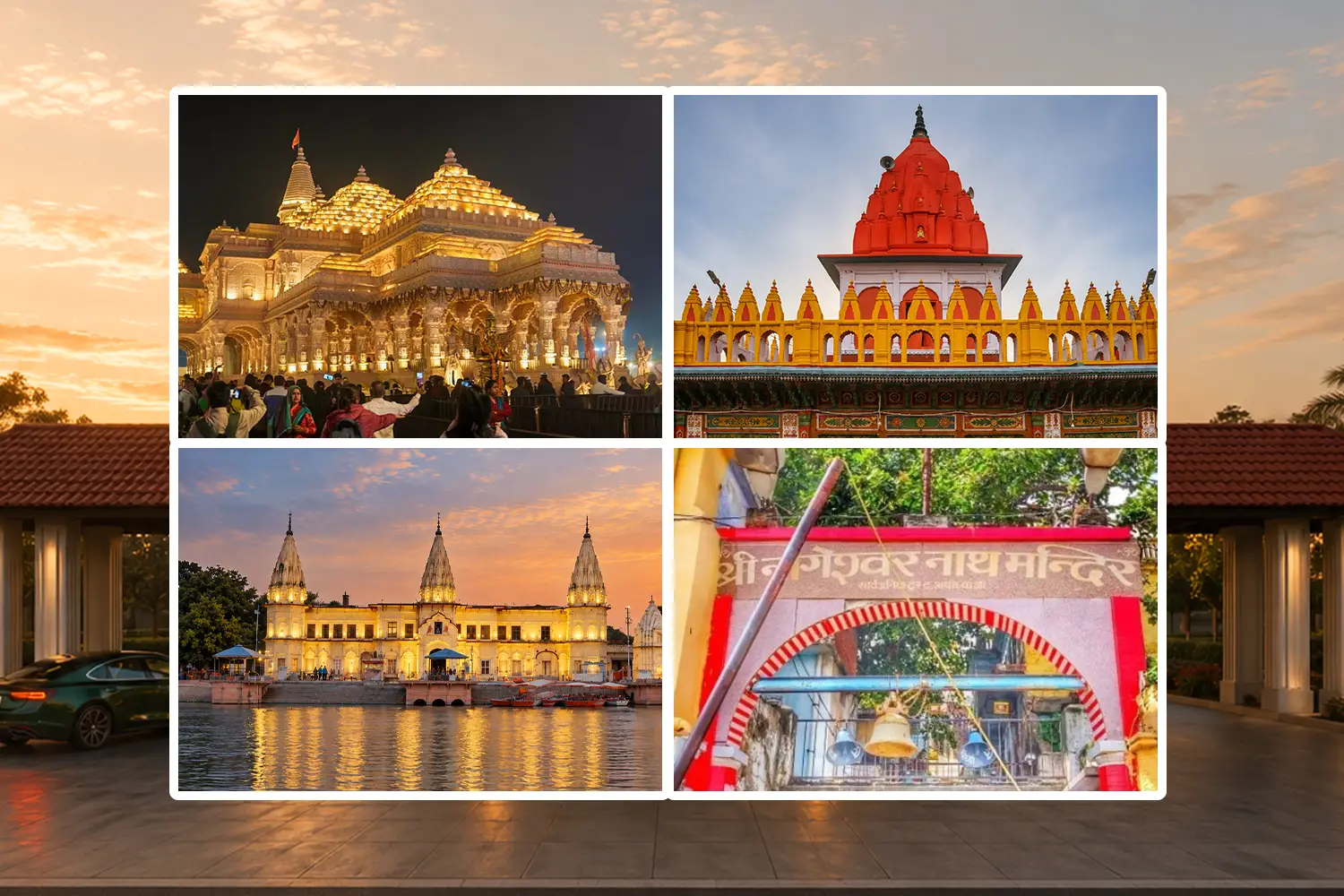
Beyond the celebrations, Ayodhya offers several important religious and cultural attractions.
Some of the most significant places to see in Ayodhya include:
| Place | Why visit? |
|---|---|
| Shri Ram Janmabhoomi Mandir | Sacred temple dedicated to Lord Ram |
| Hanuman Garhi | Prominent temple dedicated to Lord Hanuman |
| Kanak Bhawan | Temple associated with Lord Ram and Goddess Sita |
| Ram Ki Paidi | Important riverside ghats and religious gatherings |
| Nageshwarnath Temple | Ancient Shiva temple associated with local traditions |
| Guptar Ghat | Peaceful riverside destination with spiritual significance |
These attractions can be explored alongside festival activities, depending on temple timings and crowd restrictions.
Planning Your Ayodhya Kartik Purnima Visit
A memorable pilgrimage begins with good planning, particularly when visiting during a major religious festival.
Best Time to Experience the Festival
Kartik Purnima 2026 falls on Tuesday, 24 November.
The Purnima Tithi begins on 23 November at approximately 11:42 PM and ends on 24 November at approximately 8:23 PM, according to published panchang calculations.
Early morning is particularly important for Saryu Snan, while the evening offers opportunities to experience temple prayers and illuminated ghats.
How Many Days Do You Need in Ayodhya?
A two-day visit allows time for the main rituals and important temples.
A three-day stay is ideal for travellers who prefer a relaxed schedule, wish to explore additional attractions or require more flexibility during crowded festival days.
Those planning to participate in a parikrama should allow extra time according to its route and schedule.
Where to Stay During Kartik Purnima in Ayodhya

A comfortable stay makes it easier to balance early morning rituals, temple visits and sightseeing.
When looking for the best hotel in Ayodhya, consider proximity to major attractions, accessibility and facilities suited to your travel needs.
Located approximately 3 km from Shri Ram Janmabhoomi Mandir, Evoke Rambagh, Ayodhya offers a peaceful retreat amidst the city’s spiritual surroundings.
Spread across 25 acres, the property features Manorama and Sharanya Cottages, landscaped gardens, a swimming pool and Annakut, its fine-dining restaurant. It provides a welcoming setting for families and pilgrims seeking comfort during their visit.
Conclusion
Kartik Purnima in Ayodhya is a celebration of faith, tradition and the enduring spiritual significance of the sacred city.
From Saryu Snan and Deep Daan to temple visits and traditional parikramas, the festival offers experiences that remain meaningful long after the journey ends.
Plan your pilgrimage and complement your spiritual experiences with a relaxing stay at Evoke Rambagh, Ayodhya.
Frequently Asked Questions (FAQs)
Kartik Purnima is the full moon day of the sacred Kartik month. Important rituals include holy river bathing, Deep Daan, temple prayers, charity and worship of Lord Vishnu and Lord Shiva.
Kartik Purnima is observed for its spiritual significance and associations with Hindu religious traditions. It is linked to Lord Vishnu’s Matsya Avatar and Lord Shiva’s victory over Tripurasura.
Kartik Purnima will be celebrated on Tuesday, 24 November 2026, according to the Hindu lunar calendar.
Devotees traditionally perform a holy bath, offer prayers, light diyas, visit temples and participate in charitable activities. In Ayodhya, Saryu Snan is especially significant.
Kartik Purnima is also known as Tripuri Purnima or Tripurari Purnima. It is associated with Dev Diwali, particularly in Varanasi, where the festival is celebrated with grand illuminations.